
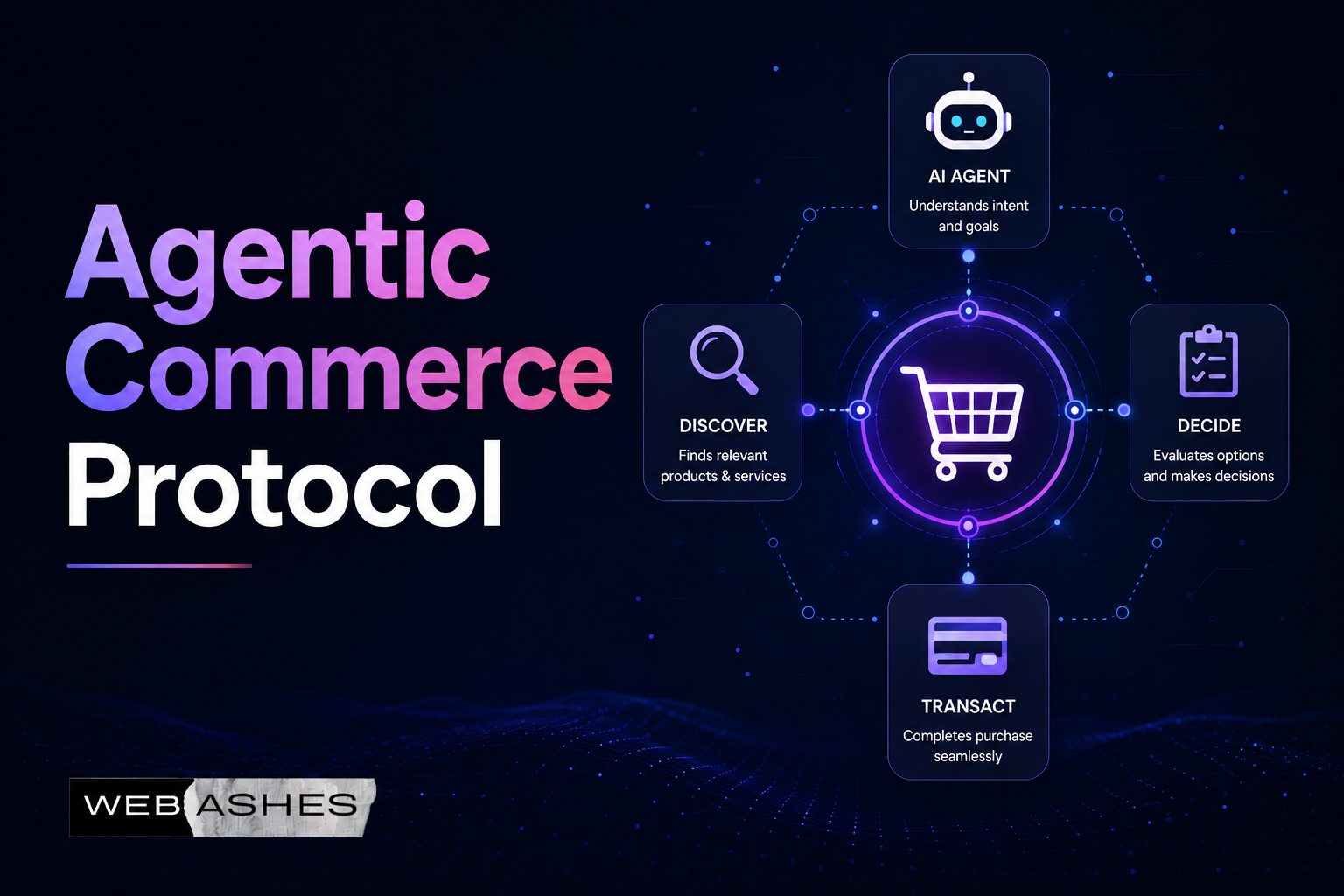
In general, ACP is the protocol that lets AI agents do the buying: Stripe handles the payments, OpenAI provides the AI interface. And, merchants plug in their product catalog and checkout logic, and shoppers can buy directly inside AI chatbots like ChatGPT.
Let’s get into the details:
Online shopping just got a new set of rules. And they weren’t written for humans; they were written for AI agents.
In 2025, OpenAI and Stripe quietly launched something called the Agentic Commerce Protocol (ACP). A few months later, Google, Shopify, Walmart, and two dozen other companies launched the Universal Commerce Protocol (UCP). These aren’t product launches or features.
They’re like security infrastructure, the protocol that enables AI agents to browse your store, create carts, and complete purchases without any human clicks.
For e-commerce owners, this raises a real question: what exactly are these agentic commerce protocols? Do they need to strictly follow them, and what happens if they don’t?
This blog answers all of that. Here, you will learn what the Agentic Commerce Protocol is, how it differs from UCP, what the security guardrails look like, what compliance means in this new world, and how your platform (Shopify, WooCommerce, or others) fits in.
What Is the Agentic Commerce Protocol (ACP)?
The Agentic Commerce Protocol or ACP is an open standard co-developed by OpenAI and Stripe. It was launched in September 2025, and it defines how AI agents can complete purchases on behalf of shoppers.
Here’s the simplest way to understand it: ACP is the set of rules that lets a ChatGPT user buy something within the chat screen. For example, when someone says “buy those running shoes” to ChatGPT, then it actually completes the purchase without the shopper ever leaving the chat.
And that’s not an overstatement. ACP is what powers Instant Checkout in ChatGPT. It manages the core purchasing workflows:
- Checkout session creation – starting a transaction with a retailer
- Payment tokenization – processing payments securely through Stripe
- Inventory verification – confirming a product is actually available
- Order execution – finalizing and confirming the purchase
ACP is structured around four API endpoints: Create, Update, Complete, and Cancel Checkout. Merchants connect their product catalog, set up a checkout API, and integrate with Stripe.
From that point on, you can sell your product through any ACP-enabled AI agent that your target customers use, like ChatGPT, Microsoft Copilot, Anthropic’s Claude, and Perplexity.
Important Update – March 2026
When ACP launched in September 2025, it powered Instant Checkout inside ChatGPT. It used to allow shoppers to buy products without ever leaving the conversation. That specific experience was paused in March 2026.
Here’s what happened: OpenAI found that data quality was the core problem. In some cases, ChatGPT was scraping merchant websites for product information rather than reading live merchant feeds. This led to inaccurate pricing and stock information at checkout. Walmart reported that conversion rates inside ChatGPT were three times lower than on their own website.
After this, OpenAI’s response was to shift to a discovery-and-redirect model. ChatGPT now recommends products and sends shoppers to the merchant’s website to complete the purchase. The ACP specification itself is still actively maintained. In-chat checkout is expected to return as data quality standards and merchant feed integrations improve.
What this means for you as a merchant: well the traffic ChatGPT sends is still high-intent. Shoppers arrive at your site having already been matched to your product through a conversation. Your checkout, your UX, and your conversion optimization all still apply. The agent does the research. And, you close the sale.
ACP vs. UCP: What’s the Difference?
Right now, there are two major agentic commerce protocols: Agentic Commerce Protocol (ACP)
& Universal Commerce Protocol (UCP). They’re backed by different companies, and most retailers like you need to support both.
Agentic Commerce Protocol (ACP)
Developed by: OpenAI + Stripe
Launching Date: September 2025
Focuses on the transaction layer, specifically enabling checkout and purchases inside ChatGPT and other AI platforms. The workflow works at conversational product discovery, where the shopper starts a research conversation and ends with a direct purchase in the same interface. And, it’s now supported by WooCommerce, BigCommerce, Wix, Squarespace, Salesforce, and others.
Universal Commerce Protocol (UCP)
Developed by: Google + Shopify + 20+ retail partners
Launching Date: January 2026
A broader, full-commerce-journey standard covering product discovery, cart management, checkout, payment, and post-purchase support. It is designed to work across any AI surfaces like Gemini, Google AI Mode, or Microsoft Copilot. UCP is already backed by Walmart, Target, Etsy, Wayfair, Visa, Mastercard, Stripe, and more. Comparing the other options, it is more robust. It handles complex features like returns, scheduling, and loyalty programs.
The key difference between ACP & UCP: Agentic Commerce Protocol (ACP) is laser-focused on enabling purchases inside ChatGPT and similar AI chat interfaces. On the other hand, UCP is broader. It is developed to cover the entire shopping journey from discovery to post-purchase, across any AI platform.
For most e-commerce owners in 2026, the practical answer is: aim to support both. Your customers may start their search in ChatGPT (ACP territory) and finalize it on Google’s AI Mode (UCP territory). Covering agentic commerce protocols of both sides means you show up throughout that journey.
Another practical way to think of ACP and UCP is the way you think of Apple Pay and Google Pay. Different ecosystems, but built for the same goal – a frictionless payment. You don’t pick one; you support both, so customers can check out however they prefer.
How Does the Agentic Commerce Protocol Work?
Let’s walk through what actually happens when a customer buys something via ACP, from their first message to your order confirmation.
Step 1: The Shopper Asks in ChatGPT
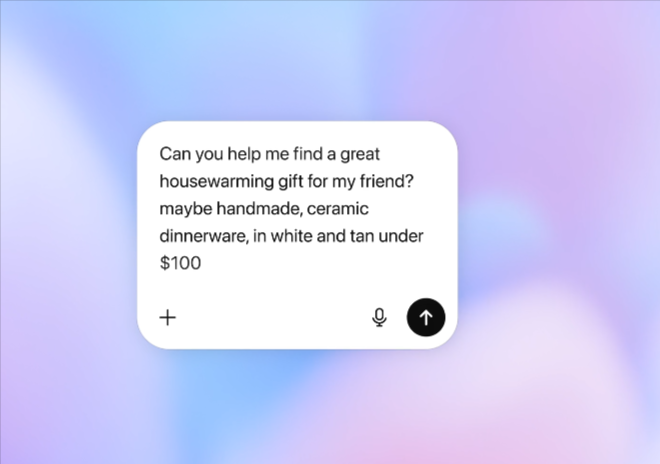
A ChatGPT user types something like: “Find me a pair of trail running shoes for wet conditions, size 10, under $150.” ChatGPT understands the intent and queries connected product catalogs via ACP.
Step 2: The Agent Queries Your Product Catalog
ACP requires you to provide a product feed, a well-structured file in JSON, CSV, or XML format that tells the AI what you sell, what’s in stock, and how much it costs. So, make sure your product catalog is perfectly optimized for any AI assistant.

Now, ChatGPT reads your product feed and surfaces relevant products. If your catalog isn’t connected or your product data is incomplete, your products don’t appear in the ChatGPT or any AI Chatbot.
Step 3: The Shopper Chooses
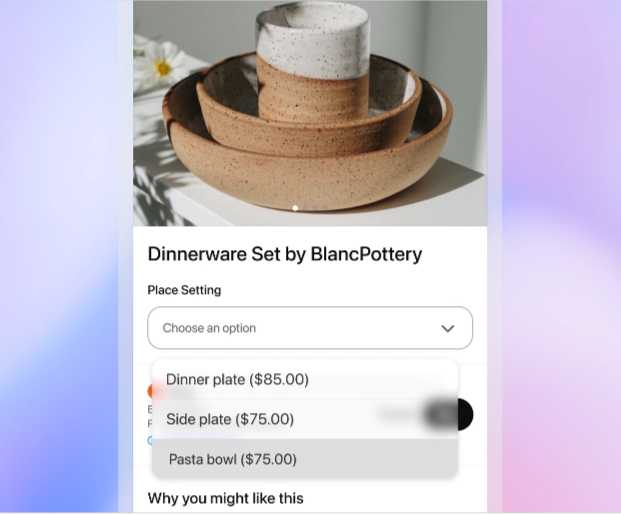
The shopper picks a product. ChatGPT initiates a checkout session via ACP’s and creates a Checkout endpoint. This sends a request to your system to begin the transaction.
Step 4: Stripe Handles the Payment
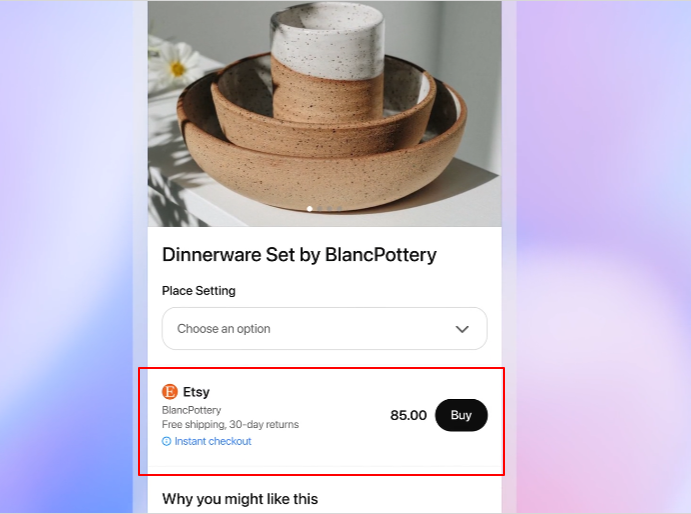
Payment is processed through Stripe using Shared Payment Tokens: secure, tokenized credentials the shopper has stored in their AI assistant. They don’t re-enter card details. The token is passed, Stripe charges it, and the purchase is confirmed.
Step 5: You Get the Order
Your system receives the completed order just like any other. You fulfill it. The shopper gets a confirmation. The AI handles any follow-up questions (order status, returns) through ACP’s order management endpoints.
How ACP works for your store
For ACP to work, you need three things: a product feed that’s up to date, a checkout API that ACP can talk to, and Stripe as your payment processor. If you’re already on Stripe, you’re closer than you think
Platform Breakdown: ACP and UCP Support in 2026
Here’s where the major e-commerce platforms stand when it comes to agentic commerce protocol support.
Shopify
Shopify is in both camps. It was an early ACP adopter and then co-developed UCP with Google. For Shopify merchants, both protocols are platform-managed. This is a great advantage, meaning you don’t need to write protocol-level code yourself.
ACP coverage comes through Shopify’s existing ChatGPT integration. Over one million Shopify merchants were automatically enrolled when ACP launched. UCP coverage is available through Shopify’s Agentic Storefronts plan. Both are managed from one admin panel. Your orders, inventory, and customer records stay in Shopify.
To get started: go to Settings → Publishing in your Shopify admin, ensure “AI and Agentic Discovery” is enabled, and confirm your metafields map correctly to Shopify’s Standard Product Taxonomy.
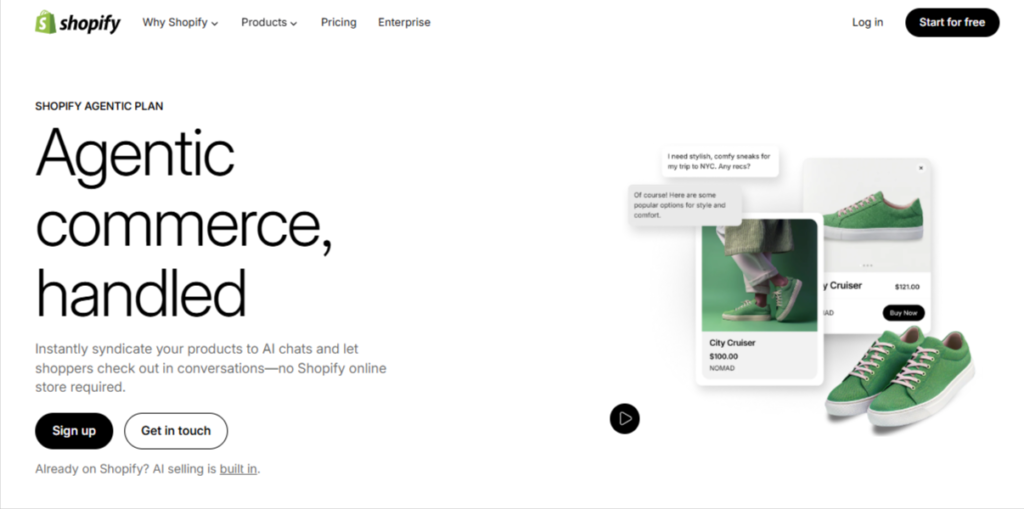
- UCP co-developer alongside Google, hence merchants get automatic compliance with zero extra setup.
- Shopify Catalog automatically aggregates product data across all AI platforms.
- Agentic Storefronts – AI-driven orders on Shopify grew 11x between January 2025 and March 2026.
- ACP support via Stripe integration is available for ChatGPT Instant Checkout.
- “Negotiated Checkout” via UCP completes transactions in under a second – genuinely instant.
WooCommerce
WooCommerce became an ACP launch partner in December 2025. And, the native MCP support has been available in beta since version 10.3. ACP integration is available via the Stripe plugin. Plus, WooCommerce is a listed Stripe ACS partner.
UCP support for the WooCommerce currently requires middleware or a community plugin. Earlier, the WooCommerce was not part of Google’s January 2026 UCP launch. That gap is being closed, and community solutions are emerging. For B2B and wholesale use cases, MCP handles procurement agents well even before full UCP support lands.
- Native Model Context Protocol (MCP) support was shipped in WooCommerce 10.3 (October 2025).
- ACP integration is available via the Stripe plugin, and WooCommerce, BigCommerce, Wix, and Squarespace are all listed as Stripe ACP partners.
- UCP support requires a custom middleware or community plugin; WooCommerce was not in Google’s January 2026 UCP launch.
- MCP acts as a Security Proxy, translating UCP/ACP requests into executable WordPress actions.
- Best suited for B2B/wholesale, where MCP handles procurement agents. B2C ACP/UCP parity expected by late 2026.
Google (UCP + Business Agent)
Building the foundational infrastructure layer for agentic commerce across its entire ecosystem. So far, they have developed so many essential infrastructures, like:
- Universal Commerce Protocol (UCP): It is Google’s open standard. It handles the full journey from discovery to post-purchase.
- Universal Cart: an AI-powered hub across Search, Gemini, YouTube, and Gmail that proactively finds deals and checks compatibility.
- Business Agent: a branded virtual sales associate that answers product questions in your brand’s voice on Google Search.
- AI Performance Insights in Merchant Center: Shows your share of voice on AI surfaces vs. similar brands.
- WebMCP: A new proposed standard that lets agents query your backend APIs directly via JavaScript functions on your website.
OpenAI (ChatGPT + ACP)
Launched Instant Checkout in ChatGPT powered by ACP. Evolving rapidly after an initial rollout that was narrower than planned.
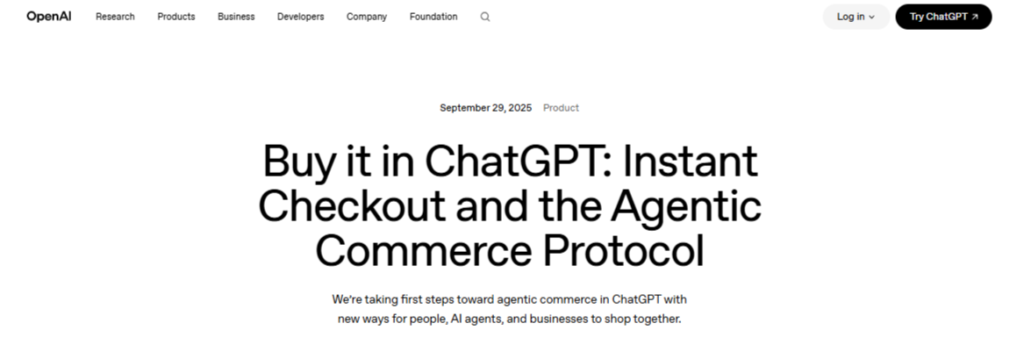
- ACP powers Instant Checkout in ChatGPT – live since September 2025, initially with Etsy and select Shopify merchants.
- Merchants pay a 4% transaction fee on every ACP checkout, on top of Stripe’s standard processing fees (~2.9% + $0.30).
- OpenAI shifted strategy in early 2026, already moving away from inline product listings toward ChatGPT Apps (e.g., Target, DoorDash, Instacart).
- ChatGPT processes 50 million shopping queries daily as of February 2026 (OpenAI).
- ACP spec is open-source on GitHub and actively maintained with regular releases.
Stripe (ACP Payment Infrastructure)
The payment backbone of the Agentic Commerce Protocol. Stripe doesn’t just process payments; it builds and maintains the ACP spec alongside OpenAI.
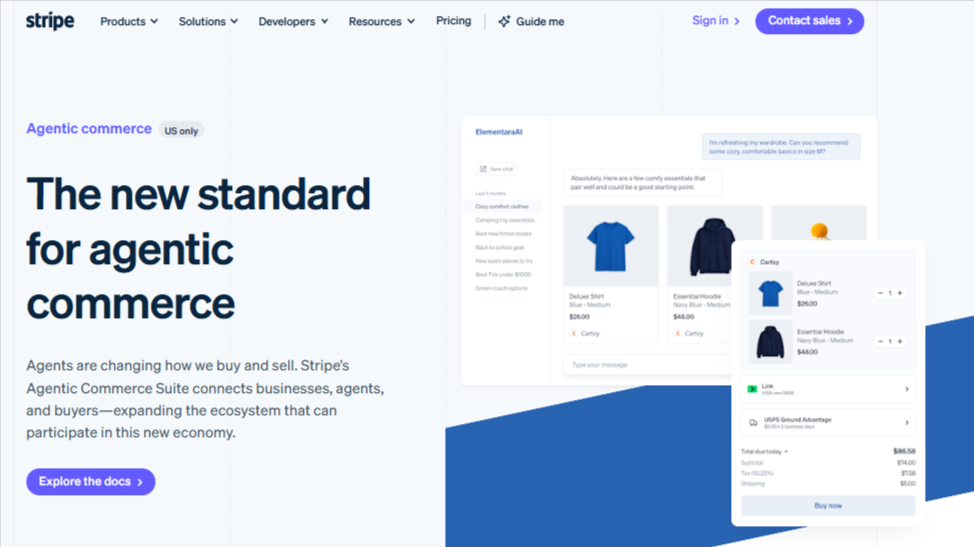
- Stripe Agentic Suite: Consisted of three components – product discovery (catalog distribution), checkout (Checkout Sessions API), and payments (Shared Payment Tokens + Stripe Radar).
- AI platform partners include OpenAI, Microsoft Copilot, Anthropic, Perplexity, Vercel, and Replit.
- Merchants connect their existing catalog or upload directly via the Stripe Dashboard, then select which AI agents to sell through.
- Shared Payment Tokens eliminate re-entry of card details, as shoppers authorize once, and agents buy seamlessly.
- Stripe Radar provides fraud detection specifically designed for AI-initiated transactions.
BigCommerce, Wix, Squarespace
All three are listed as Stripe ACS partners, which means ACP integration is handled through the platform dashboard rather than custom code. Check your platform’s Agentic Commerce or AI Discovery settings to confirm it’s enabled.
Custom stacks
If you’re running a custom commerce stack without a platform layer, you’ll implement ACP directly. The five core REST endpoints are:
- Create Checkout Session,
- Get Checkout Session,
- Update Checkout Session,
- Complete Checkout Session, and
- Cancel Checkout Session.
The full specification and interactive playground are at agenticcommerce.dev.
The Security Guardrails of the Agent Payments Protocol (AP2)
One of the most common concerns e-commerce owners have about agentic commerce is security. If an AI can buy things on someone’s behalf, what stops it from buying the wrong thing? Or spending too much? Or being tricked by a fraudulent agent?
And, to answer these questions, the Agent Payments Protocol (AP2) is specifically designed. It builds what its designers call an “infrastructure of trust” for autonomous transactions. Here’s how it works.
1. Bounded Authority: The Agent Can Only Do What Users Allow
Every agentic transaction operates within a set of user-defined guardrails. The shopper sets these up when they authorize an AI agent to act on their behalf:
- Spending caps: A hard budget limit that the agent cannot exceed under any circumstances.
- Product or brand restrictions: The user can restrict purchases to specific brands, categories, or product types.
- Conditional execution: The agent only completes the purchase if specific conditions are met, for example, “buy only if the price drops below $50.”
2. Cryptographically Signed Digital Mandates
Every agreement between a shopper and an AI agent is captured as a digital mandate — a tamper-proof, cryptographically signed record that documents exactly what the agent was authorized to do.
These mandates are written in plain English so both the shopper and the merchant can understand what was agreed. They’re also unchangeable after the fact, and no retroactive modification is possible. This provides an irrevocable record for any dispute or return.
3. Strong Identity and Authentication
AP2 is built on OAuth 2.0 – the same standard banks and major platforms use for secure login. Key features:
- Agents act with delegated permission, and the AI proves it has specific rights from the user, without sharing the user’s actual credentials.
- Merchants can verify instantly whether an agent is authorized and trusted before accepting a transaction.
- This protects against automated attacks, rogue agents, and spoofed transactions.
4. Permanent Audit Trail for Every Transaction
Every step of an agentic transaction is logged in a verifiable, permanent audit trail. This creates a clear causal record: who authorized what, when, at what price, and under what conditions.
For merchants, this is actually a benefit. In the event of a dispute, a return, or a fraud claim, you’re not arguing over what happened. There’s a tamper-proof record that all parties can reference. AP2 even helps determine who is at fault in a disputed transaction.
5. Privacy-Preserving Technology
AP2 is shifting the security focus from just protecting payment data to protecting autonomous decisions. Advanced privacy-preserving technology keeps sensitive user information safe while still maintaining a transparent connection between the shopper, the merchant, and the payment processor.
So, in a summarized way, AP2 transactions are actually more accountable than traditional checkouts in many ways. A human clicking the Buy button leaves no cryptographic record of what they intended. An AP2 transaction does this with spending limit, product constraints, authorization, and execution, all in a tamper-proof log
What Does ACP Cost for Merchants?
This is a practical question most explainer posts skip over. Here’s the honest answer.
When OpenAI’s Instant Checkout was live, merchants paid two layers of fees on every ACP transaction:
OpenAI used to charge a 4% transaction fee on every purchase completed inside ChatGPT. Stripe charged its standard processing fee – approximately 2.9% plus $0.30 per transaction. On a $100 order, combined fees were approximately $7.20.
That fee model will apply again when in-chat purchasing resumes. It’s worth factoring into your margin calculations before enabling ACP checkout for high-volume or low-margin products.
For the current discovery-and-redirect model, where ChatGPT sends shoppers to your website, there’s no ACP transaction fee. The shopper completes the purchase on your site through your normal checkout, and your standard payment processing fees apply.
If you’re on Stripe and using the Agentic Commerce Suite, there are no additional Stripe fees for catalog syndication or the agent management console itself. You pay when a transaction processes, using your existing Stripe pricing.
What Is Agentic Commerce Compliance?
“Compliance” in agentic commerce isn’t just about legal requirements. It also covers the full set of security, operational, and data standards that ensure AI agents act within authorized boundaries and leave a verifiable record of everything they do.
For e-commerce owners, there are four areas to understand:
1. Transactional Compliance
Digital mandates: Every agentic transaction must be backed by an AP2 mandate. A cryptographically signed record of what the user authorized. This is your permanent paper trail for dispute resolution and returns.
Merchant of Record (MoR): A core principle of both ACP and UCP is that the retailer stays the legal seller. You keep the customer relationship, your margins, and legal responsibility for the sale, even when the purchase is initiated by an AI.
MFA compliance: Google Pay’s Cross-Device Authentication is designed to support Multi-Factor Authentication (MFA) mandates, moving desktop checkouts to secure, mobile-first biometric or PIN flows.
2. Data Readiness – Being “Compliant” With AI Agents
For an AI agent to successfully sell your products, your catalog data has to meet a machine-readable standard. This is increasingly what “compliance” means in the agentic era:
- Real-time inventory and pricing accuracy: AI agents won’t recommend products they can’t confirm are available at the stated price.
- Valid GTINs and brand identifiers: Agentic commerce agents use these to precisely identify products in a global marketplace.
- Schema.org markup on product pages: Allows AI systems to parse your product data directly from your website without intermediary catalogs.
- Structured product feeds: Optimized product catalogs in a format so that agents can read, like JSON, CSV, or XML, with complete product attributes.
3. Ethical and Operational Guardrails
These are the rules that govern what agents are allowed to do and what you’re responsible for as the merchant:
- Agents must operate within the shopper’s defined guardrails, such as budget caps, brand preferences, and conditional rules.
- You can verify and reject agents that aren’t authorized. AP2 allows merchants to check agent credentials before accepting a transaction.
- Privacy-preserving technology must protect user data while maintaining the transparent merchant-processor link.
4. Platform and API Security
If you’re using the Merchant API to manage your catalog at scale (the recommended approach for large catalogs), developers need to register users with specific roles and authenticate via OAuth 2.0 linked to secure cloud projects. This is a technical compliance requirement for programmatic catalog management under both ACP and UCP.
What is the Key compliance principle for retailers?
In agentic commerce, “compliance” isn’t just about following rules. Rather, it’s about building the infrastructure that makes your store trustworthy to AI agents. Clean data, valid identifiers, AP2 mandates, and verifiable agent credentials are the new compliance baseline.
The Numbers That Show Why This Matters
| 11x growth in AI-attributed orders on Shopify between January 2025 and March 2026 |
| 50 million shopping queries processed by ChatGPT daily as of February 2026 (OpenAI) |
| $20.9 billion in AI-driven retail spending projected for 2026, nearly 4x the 2025 figure (eMarketer) |
| 805% YoY surge in AI-driven traffic to retail sites on Black Friday 2025 (Adobe Analytics) |
These numbers aren’t speculative. They’re happening in real stores, on real platforms, with real customers. The protocols discussed in this blog are the infrastructure behind every one of those transactions.
What E-Commerce Owners Should Do Right Now
Here is a list of some prioritized and realistic steps based on your current situation, that e-Commerce owners should follow:
If you’re on Shopify
- Enable Agentic Storefronts in your Shopify Admin. Doing this connects you to UCP-compatible AI surfaces (ChatGPT, Microsoft Copilot, Google AI Mode) automatically.
- Audit your product data in the Shopify Catalog. Include complete titles, descriptions, accurate pricing, and real-time inventory.
- Make sure Stripe is set up as a payment method. Which is required for ACP/Instant Checkout in ChatGPT.
- Activate your Business Agent in Google Merchant Center and set your brand voice and conversation starters.
If you’re on WooCommerce
- Install the Stripe ACP plugin. WooCommerce is already a listed Stripe partner, making ACP integration the most accessible first step.
- Enable WooCommerce MCP support (available since version 10.3) to allow AI agents to query your store directly.
- Consider a community UCP plugin or middleware solution for Google AI Mode compatibility; native WooCommerce UCP support isn’t built in yet, but the gap is closing.
- Invest heavily in product data quality: schema.org markup, GTINs, and real-time inventory. This is platform-agnostic and affects all protocols equally.
For any platform
- Add conversational attributes to your product feeds, like Q&A pairs, compatible accessories, variant details, etc.
- Implement schema.org Product markup on your product pages for broader AI discoverability.
- Set up the AI Performance Insights tool in Google Merchant Center to track your share of voice on AI surfaces.
- Start small and test with a subset of your best-selling products before rolling out across your full catalog.
- Filter out products with complex restrictions initially (state-specific availability, age verification) to avoid agent errors at checkout.
My fee note for ACP via ChatGPT
OpenAI charges a 4% transaction fee on every Instant Checkout purchase via ACP, in addition to Stripe’s standard ~2.9% + $0.30 processing fee. On a $100 order, total fees are approximately $7.20. Factor this into your margin calculations before enabling ACP checkout.
Frequently Asked Questions
What is the Agentic Commerce Protocol (ACP)?
What is the Universal Commerce Protocol (UCP)?
What’s the difference between ACP and UCP?
How does agentic commerce protocol work?
Is ACP open source?
What is ACP Instant Checkout in ChatGPT?
Does agentic commerce protocol work with Google?
Does agentic commerce protocol work with Shopify?
Does agentic commerce protocol work with WooCommerce?
Does agentic commerce protocol work with Stripe?
Does agentic commerce protocol work with ChatGPT?
Does agentic commerce protocol enable instant checkout?
Is agentic commerce protocol secure?
What is agentic commerce compliance?
What happens if an AI agent makes a mistake or buys the wrong thing?
Can merchants verify that an AI agent is legitimate?
Who pays the fees for ACP transactions?
What’s the fastest way to get started with ACP?
Do I need a developer to implement agentic commerce protocols?
Will agentic commerce protocols replace my website?
Final Thoughts
Two open standards were launched for the agentic commerce protocol. Two of the world’s largest tech companies, OpenAI and Google, are competing to be the infrastructure layer for how people shop online. The protocols are live. The transactions are happening within AI agentic commerce. And the retailers who’ve plugged in are already seeing 11x growth in AI-driven orders.
Agentic Commerce Protocol (ACP) and Universal Commerce Protocol (UCP) aren’t buzzwords anymore. They’re the new rails of e-commerce. And the question for your business isn’t whether to support them. What you need to do is quickly get ready for.
Start with your product data. Make sure it’s clean, accurate, and structured for machines, not just humans. Then connect your catalog to Stripe’s Agentic Suite or Shopify’s Agentic Storefronts. Then work toward UCP compatibility for Google’s AI surfaces.
The shoppers are already there. AI agents are already shopping for them. The only question is whether they’ll find your store when they do.
Leave a Reply