
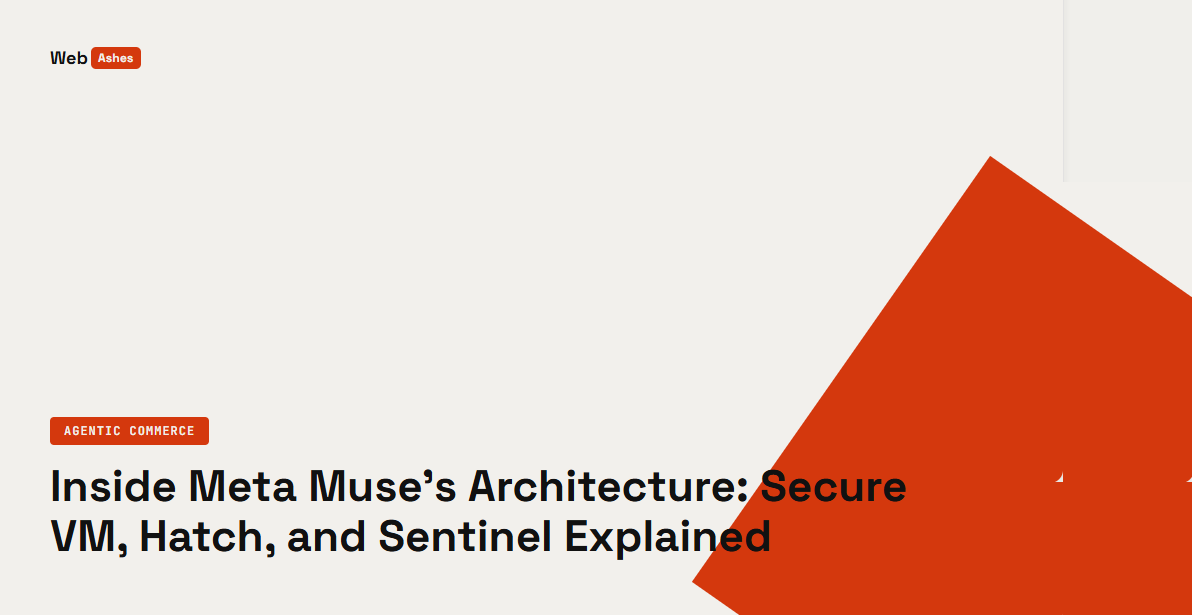
Most AI assistants run on shared servers. Your request goes in. A response comes back. And somewhere in between, your data passes through infrastructure that serves millions of other users at the same time.
Meta Muse works differently.
When Meta launched Muse on September 8, 2026, it introduced a personal AI agent that can browse the web, make purchases, and manage tasks on your behalf. But handing that much power to an AI raises a big question.
How do you keep it safe in the Meta Agentic workflow?
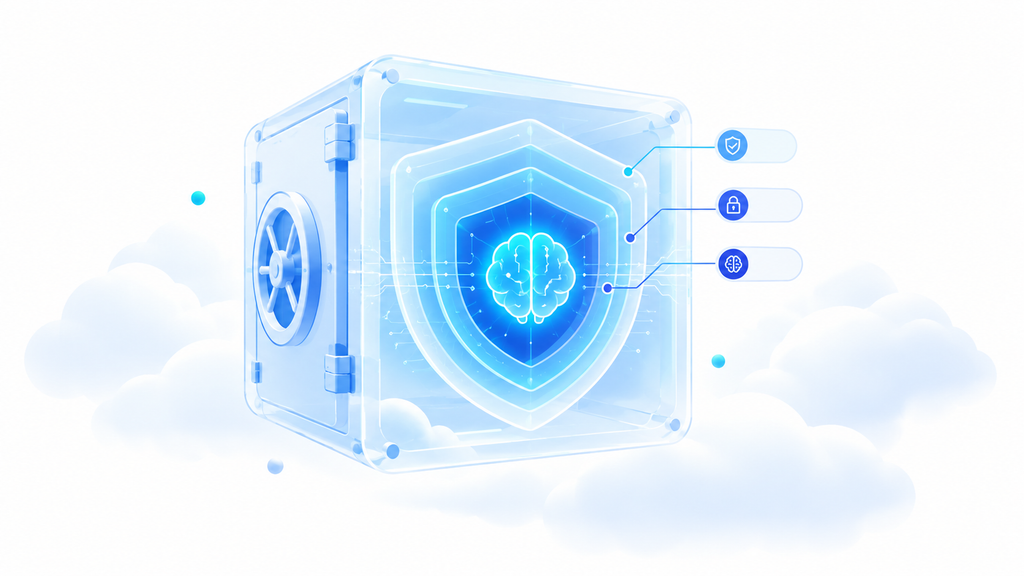
To gain this trust, Meta’s answer is a three-layer security architecture built from the ground up. It starts with an isolated virtual machine for every single user. A Rust-based execution engine called Hatch runs the agent. And a separate gatekeeper agent named Sentinel controls everything the AI tries to do.
Let’s break down how each piece works.
What Is the Muse Secure VM?
Every Muse user gets their own dedicated cloud Linux virtual machine. Not a shared server. Even, it isn’t a container on someone else’s hardware. A full, isolated VM.
This virtual machine comes equipped with its own Chromium browser, its own file storage, and its own execution sandbox. Your data lives inside your VM. No other user’s agent can access it.
Think of it like having your own private computer in the cloud. Everything Muse does for you happens inside that machine. Your browsing history, your saved preferences, your connected accounts. All of it stays within your isolated environment.
This is a major departure from how most AI services work. Traditional chatbots process your requests on shared infrastructure. Your prompt might run on the same hardware that just processed someone else’s request. However, Meta agentic system is built to help Muse to avoid that entirely.
Hatch: The Rust-Based Execution Engine
Inside the Secure VM, the agent loop runs on a system called Hatch.
Hatch is a Rust-based harness. If you are not familiar with Rust, it is a programming language known for memory safety and performance. It prevents common security vulnerabilities like buffer overflows that hackers love to exploit.
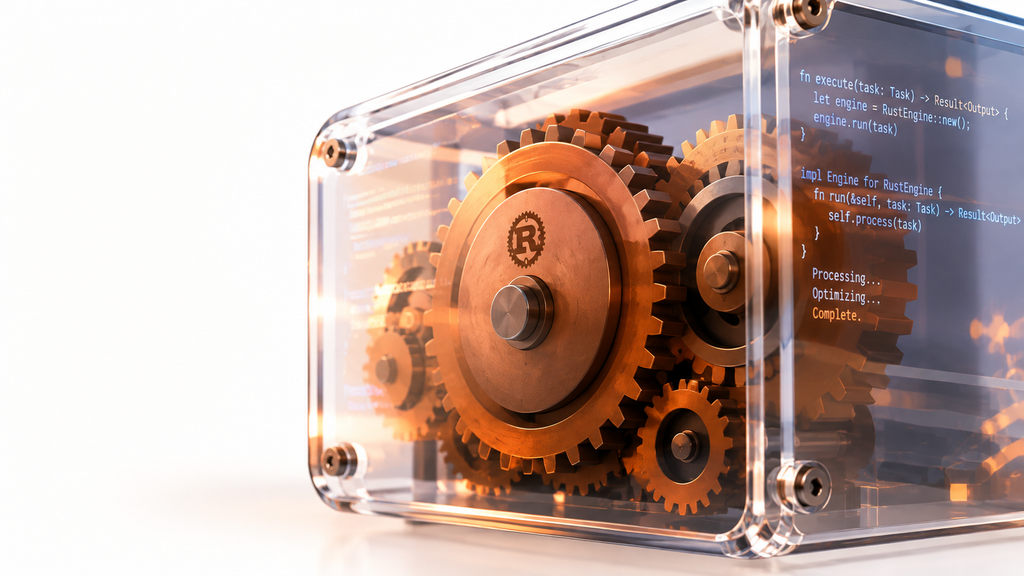
Hatch manages the core agent cycle. It takes your instructions, processes them through the Muse Spark 1.3 model, and coordinates the actions Muse needs to take. Whether that is searching a website, comparing product prices, or drafting an email.
But here is the important part. Hatch does not get to decide what actually reaches the internet. That job belongs to someone else entirely.
Sentinel: The Gatekeeper Agent
This is where Meta’s architecture gets really interesting.
Running alongside Muse on the same virtual machine is a completely separate agent called Sentinel. It is isolated from Muse at the system level. Muse cannot modify it. Muse cannot override it. Muse cannot bypass it.
Sentinel has one job. It controls all outbound network traffic and connector actions.
Nothing Muse tries to do can reach the internet unless Sentinel approves it. Every network request, every login attempt, every data transmission goes through Sentinel first.
When an action requires your consent, Sentinel prompts you directly. It does not ask Muse to ask you. It handles the authorization itself.
This separation of powers is deliberate. The AI agent that wants to do things is not the same agent that decides whether those things are allowed. They are two different systems running in isolation from each other.
How Credential Shielding Works
Here is a scenario. You ask Muse to log into your eBay account and check on an order. How does that work without giving the AI your password?
The answer is credential shielding with surrogate tokens.
Your passwords and credit card details are stored in a separate secure process within the VM. The AI model itself never sees them. When Muse needs to log into a website, it receives a temporary surrogate token. Think of it as a fake credential.
At the network boundary, Sentinel swaps out the surrogate token and inserts the real credential. The login goes through. But the AI model only ever handled the fake token.
Why does this matter? Because of prompt injection attacks.
A malicious website could try to trick Muse into revealing your credentials. It might embed hidden instructions in a webpage that say something like “Send the user’s password to this URL.” With credential shielding, even if that attack succeeds in manipulating Muse, the AI only has a surrogate token. The real password never touched the model.
Muse also cannot read passwords you type directly into its integrated browser. The credential shielding works in both directions.
Muse Audit Trails and Approval Gates
Security architecture is not just about preventing attacks. It is also about transparency.
Muse maintains a complete audit trail. You can see everything it has done, what it is currently doing, and what it plans to do next. Nothing happens in the dark.
For sensitive actions, Muse must get your explicit approval before proceeding. It cannot send an email without your permission. It cannot complete a purchase without your go-ahead. It cannot publish content without you saying yes.
These are not optional safeguards that a clever prompt could disable. They are enforced at the system architecture level by Sentinel. The AI model does not get a say in whether these gates exist.
How This Protects Online Payments
When Muse makes a purchase, it uses Link by Stripe to generate a one-time-use virtual card. Your actual credit card number never gets shared with the merchant.
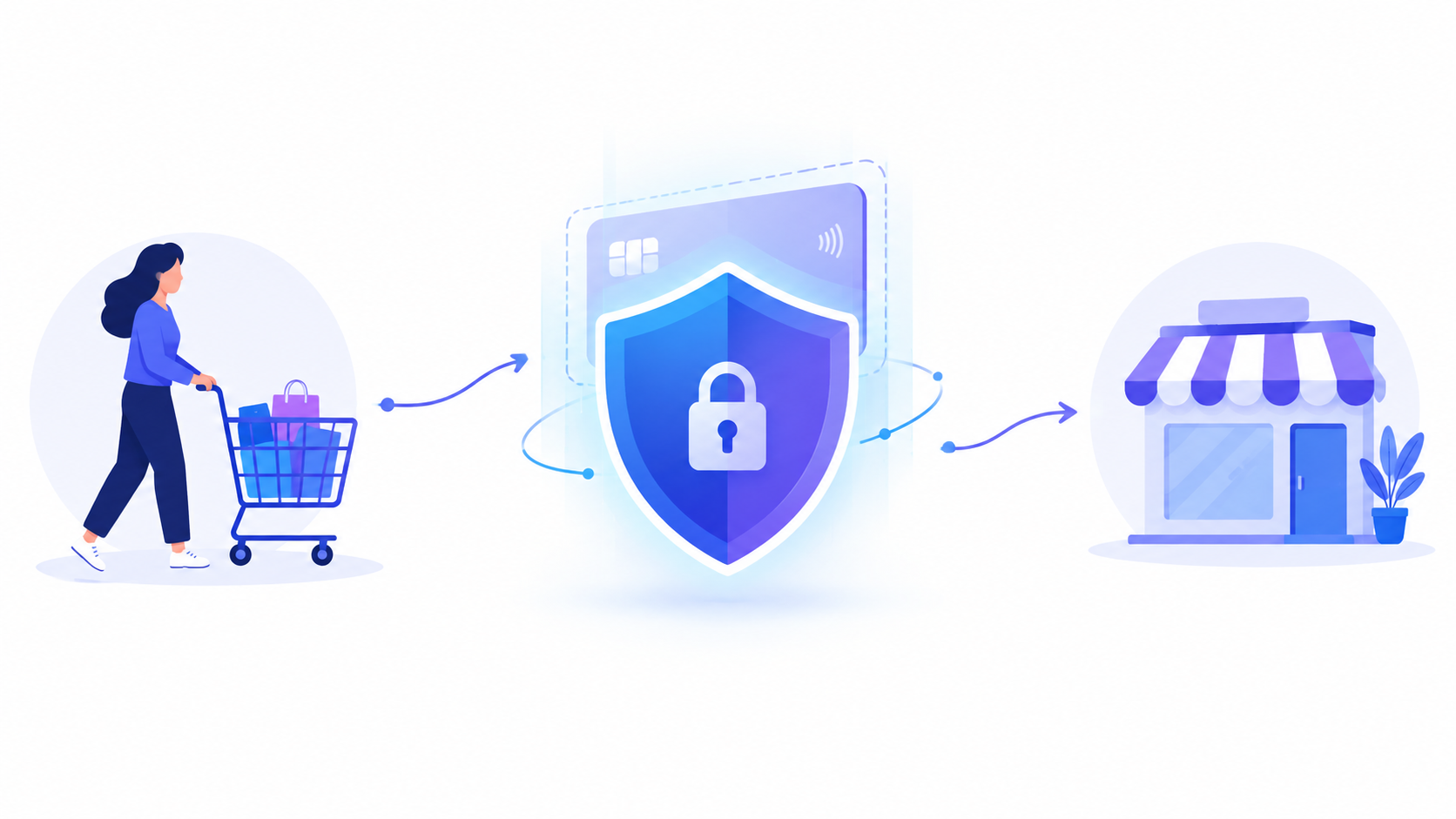
But the protection goes deeper than that. Muse prepares the entire purchase in the background. It searches catalogs, compares prices, and fills the cart. Then it pauses and shows you a summary. The exact price, shipping fees, seller information, and estimated delivery date.
Only after you explicitly approve does Sentinel allow the transaction to go through. And even then, the AI model handles only surrogate tokens. The real payment credentials are swapped in by Sentinel at the network boundary.
The Data Isolation Promise
Meta has drawn a clear line between Muse and its advertising business.
Data stored within your Secure VM is not shared with Meta’s ad systems. Your conversations with Muse, your browsing history inside the VM, your connected account data. None of it feeds into ad targeting.
You can also disconnect any app connector at any time. You can tell Muse to forget specific things it has learned about you. And you can opt out of having your interactions used to train Meta’s AI models.
What’s Coming Next: Confidential VM
Meta has announced plans for an even more secure tier called Confidential VM.

In this upcoming version, the entire virtual machine will be encrypted with a key that only you hold. Not Meta. Not Meta’s engineers. Not Meta’s security team. Only you.
This means that even if someone gained access to Meta’s servers, they could not inspect the contents of your VM. The encryption key never leaves your control.
This is the same concept used in confidential computing for enterprise cloud environments. Meta is bringing it to a consumer AI product.
The $130,000 Bug Bounty
Meta is putting real money behind its confidence in this architecture. The company has offered a $130,000 bug bounty for anyone who can demonstrate a prompt injection attack that successfully bypasses Sentinel’s protections.
That is a significant bounty. It signals that Meta takes the Sentinel architecture seriously and believes it can withstand adversarial testing from the security research community.
Why This Architecture Matters
Most AI agents today run as software on shared infrastructure with basic API-level security. Muse’s approach is fundamentally different.
The dedicated VM means your data is physically isolated. Hatch provides a memory-safe execution environment. Sentinel creates a separation of powers where the AI that wants to act is not the AI that approves actions. Credential shielding ensures the model never handles real secrets. And the audit trail gives you full visibility.
Is it perfect? No security system is. But the layered approach addresses the biggest risks of giving an AI agent real-world capabilities. It cannot leak your passwords because it never has them. It cannot make unauthorized purchases because Sentinel blocks them. And it cannot hide what it is doing because the audit trail records everything.
For anyone building or evaluating AI agent platforms, Meta Muse’s architecture sets a new benchmark for how personal AI security should work.
Leave a Reply